
You’ve narrowed your ski trip down to Switzerland, and now the harder question shows up: which resort? The country has dozens of good ones, but only a handful earn a place on any serious shortlist of the best ski resorts in Switzerland.
Zermatt, Verbier, Grindelwald and Laax each do something the others don’t — glacier skiing that never really stops, a freeride reputation built on real mountains, a train that drops you at the piste, or a terrain park scene that draws freestylers from across Europe.
This guide compares all four honestly, including where they cost more than you might expect, so you can pick the one that actually fits how you ski. Renting gear locally through alpy.com is worth planning ahead too, since Swiss resort-counter prices are some of the highest in the Alps.
What Makes Switzerland’s Best Ski Resorts Different?
Switzerland has dozens of world-class ski resorts, but only a few make this shortlist because they combine altitude, infrastructure and price better than the rest. Villages sit higher than most French or Austrian equivalents, which is why glacier and high-altitude skiing is so common here. Swiss mountain trains, cable cars, efficient lift systems and grooming are engineered with the same precision the country is known for elsewhere — lift queues are shorter, snowmaking is more consistent, and connections between villages tend to work exactly as the timetable says they will. That makes the country a standout for winter sports as much as for pure skiing.
And, to be direct about it, Switzerland is not the budget corner of the Alps. A day lift pass at Laax or Grindelwald runs roughly CHF 60–90, and Verbier’s six-day pass sits around CHF 340–357 — both well above typical Austrian or Italian pricing, and that’s before accommodation or dining, which carry the same premium. That cost buys reliable snow, faster lifts and less queuing, and for many skiers it’s a fair trade. But if budget is your main filter, a separate guide to more affordable Alpine resorts is a better starting point than this one — this article assumes Switzerland is the destination, not the compromise.
Zermatt: Matterhorn Views and Skiing 365 Days a Year
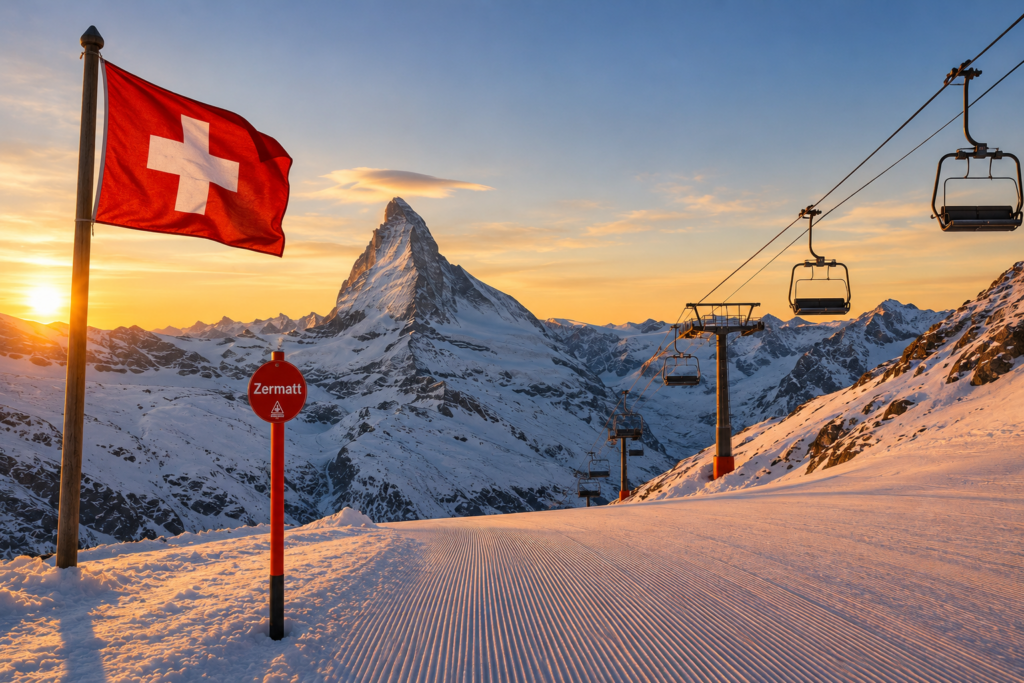
Zermatt is the resort most people picture when they imagine skiing in Switzerland, and the Matterhorn is the reason why. The car-free village sits directly beneath the mountain, and the ski area — 200km of pistes on the Swiss side, rising to 360km when combined with Cervinia across the Italian border on the International pass — wraps around some of the best sightlines in the Alps, with the Matterhorn setting delivering stunning views across the Swiss Alps.
What sets Zermatt apart is the Matterhorn Glacier Paradise cable car station at 3,883m, the highest in Europe. It opens onto the Theodul Glacier, where year-round skiing runs 365 days a year — this is where national ski teams train through summer. From the top, clear days reveal 38 four-thousand-metre peaks, 14 glaciers and three countries at once. Zermatt suits intermediate-to-advanced skiers who want scenery and altitude in equal measure, with well groomed slopes for intermediates and some challenging slopes for experienced skiers, plus beginners who don’t mind paying for polish: ski schools and mountain restaurants here are excellent, if not cheap.
It’s also the clear favourite among Swiss resorts booked through alpy.com: over a full 2025/26 winter season, Zermatt drew noticeably more rental bookings than Verbier, Grindelwald or Laax combined, making it the go-to pick for a ski holiday with plenty of high-altitude ski slopes.
Zermatt also has lively après ski, with bars and nightclubs in the village.
Alpy Tip: Book your Matterhorn Glacier Paradise lift ticket and ski rental separately in advance. Zermatt uses dynamic pricing, so tickets bought weeks ahead cost noticeably less than walk-up rates, and pre-booked rental gear (skis or snowboard) means one less queue on your first morning.
Verbier: Four Valleys and Switzerland’s Freeride Capital
Verbier is the anchor of the Four Valleys (4 Vallées), Switzerland’s largest connected ski area at roughly 410km of pistes served by around 90 lifts. That scale alone would justify a spot on this list, but Verbier’s real identity is freeride, making it one of the top ski resorts for thrill-seekers. The Bec des Rosses, the intimidating rock face above the resort, hosts the Freeride World Tour finals — this is where the sport’s best skiers and snowboarders drop into lines most visitors would only photograph, and Verbier is renowned for its challenging off-piste terrain.
Beyond the headline terrain, Verbier runs a network of marked, patrolled-but-ungroomed freeride itineraries, with legendary areas around Mont Gelé, that let adventurous skiers get a taste of off-piste terrain without going fully unmarked. The village itself has a younger, more nightlife-driven energy than Zermatt, which makes Verbier a strong fit for advanced skiers and snowboarders in their twenties and thirties, or anyone chasing a freeride-adjacent trip without full backcountry commitment, while Andermatt is also known for excellent freeride opportunities. It’s less suited to nervous beginners — the valley’s easy runs exist, but they’re not the main event. Verbier was named Switzerland’s Best Ski Resort at the World Ski Awards in both 2024 and 2025.
Grindelwald: The Jungfrau Region, Made Easy to Reach
Grindelwald solves a problem the other three resorts don’t: getting there without a car. The village sits on a direct rail line from Interlaken Ost, and a single Jungfrau ski pass covers the whole region — Grindelwald-Wengen (Kleine Scheidegg–Männlichen), Grindelwald-First, and Mürren-Schilthorn — across roughly 211km of pistes. The Eiger Express gondola, one of the fastest tricable installations in the world, cuts the trip from valley floor to the Eigergletscher lift network to under 15 minutes.
Grindelwald offers spectacular glacier scenery and excellent slopes, with the Eiger’s north face looming over almost every run and Kleine Scheidegg among the country’s most photographed ski areas. As part of the Jungfrau Region, it suits family-friendly trips and intermediate skiers particularly well, since the terrain spans gentle blues through to genuinely challenging runs without forcing a long transfer between them. That range also works for mixed-ability groups, with gentle slopes and nursery slopes for beginners as well as more testing terrain higher up. English-speaking ski instructors, ski school options for first-timers, and dedicated children’s areas also make lessons easier to arrange for visiting families. Public transport access also makes it one of the more practical Swiss resorts to reach for a shorter, car-free trip.
Laax: Switzerland’s Terrain Park Capital
Laax, part of the Flims-Laax-Falera area in Graubünden, is famous for terrain parks and freestyle skiing. The resort’s 225km of marked runs and 25km of marked off-piste routes are almost secondary to its four terrain parks, which pack in more than 90 obstacles including the world’s longest halfpipe. Laax hosts the LAAX OPEN, an annual snowboard World Cup event in slopestyle and halfpipe, and the resort’s whole culture — snowboard-forward, younger crowd, strong freestyle school — reflects that.
That doesn’t mean Laax is only for park riders. The wider ski area has plenty of wide slopes and well groomed cruising terrain, plus open bowls above the treeline, so mixed groups of skiers and snowboarders can genuinely ski together and split off when someone wants a lap through the pipe. It’s the pick for snowboard-focused trips, terrain-park progression, or any group where “we all ski differently” is the actual problem to solve. Compared with Zermatt or Verbier, Laax also runs slightly cheaper on lift passes, though it’s still priced well above resorts outside Switzerland.
When Is the Best Time to Ski These Resorts?
The Swiss skiing season generally runs from early December to late April, and February usually brings the most reliable snow coverage. Peak season across all four resorts runs late December through February, with the best snow quality and the highest prices to match — Christmas and New Year, plus the February half-term weeks, sell out lift passes, accommodation and rental gear well in advance. January is generally the quietest and best-value stretch of the core season, with cold, stable conditions and thinner crowds on the lifts.
Zermatt is the outlier on timing, and both Zermatt and Saas Fee often open in November: because the Theodul Glacier stays skiable year-round, it’s one of the only places in the Alps where a spring or even summer ski trip is a realistic option, not just a novelty. Verbier and Laax both tend to hold good snow into April thanks to altitude, while Grindelwald’s lower valley runs are more weather-dependent later in the season, so late-season visitors there should stick to the higher Männlichen and First sectors, with March and early April often bringing longer days and sunnier skies.
How Do You Choose Between These Four Resorts?
If Matterhorn views and glacier skiing matter most, Zermatt is still among the best resorts in Switzerland — and few places match that combination of scenery and 365-day snow. If freeride terrain and scale are the priority, Verbier and the Four Valleys are hard to beat. If you’re travelling without a car or skiing with a mixed-ability family group, Grindelwald offers a blend of easy access and varied terrain that makes logistics simpler. And if the trip is built around a snowboard or terrain-park focus, Laax is the clear choice.
| Resort | Best known for | Piste size | Best for |
|---|---|---|---|
| Zermatt | Matterhorn views, year-round glacier skiing | 200km (360km with Cervinia) | Scenery, intermediate–advanced, year-round skiing |
| Verbier | Four Valleys scale, freeride reputation | ~410km | Advanced/freeride skiers, nightlife |
| Grindelwald | Jungfrau region, train accessibility | ~211km | Families, car-free trips, mixed abilities |
| Laax | Terrain parks, freestyle culture | 225km + 25km off-piste | Snowboarders, park riders, younger groups |
Whichever resort you choose, they offer different strengths depending on whether you want freeride, families, scenery or freestyle, so sorting your ski or snowboard rental before you land is worth the ten minutes it takes — Swiss resort-counter prices reflect the same premium positioning as the lift passes, and pre-booking through alpy.com avoids paying that rate twice. You can also add protection cover or extra gear through the additional gear and protection options if you’d rather not think about a lost ski pole halfway down the Theodul Glacier.
Other Swiss Resorts Worth Knowing About
Zermatt, Verbier, Grindelwald and Laax cover the main reasons skiers choose Switzerland, but they’re not the only Swiss resorts that rate highly. On skiresort.info‘s visitor-evaluated rankings, Arosa Lenzerheide and St. Moritz–Corviglia both score 4.7 out of 5 — higher than any of the four above — and neither should be overlooked when comparing options.
Arosa Lenzerheide, in Graubünden, combines two resorts into one large, gentle-terrain area that’s especially strong for families and beginners, with reliable snow and less crowding than the bigger-name resorts. St. Moritz, also in Graubünden, is Switzerland’s original glamour resort — host of the Winter Olympics in 1928 and 1948 — pairing wide, sunny pistes above the Engadin valley with understated luxury, high-end boutiques, and a sophisticated après-ski scene built around fine dining.
Saas Fee is another strong alternative, known for reliable snow, excellent ski schools for beginners, and skiing on slopes reaching up to 4,000 metres. Gstaad is more beginner-oriented, with over 200 kilometres of slopes and more than half suited to beginners. For new skiers, Villars-sur-Ollon is an easily accessible mountain village option.
Frequently Asked Questions
Which is the best ski resort in Switzerland overall?
There’s no single “best” answer because the best Swiss ski resorts suit different types of skiers. Zermatt leads for scenery and year-round glacier skiing, Verbier for freeride terrain and scale, Grindelwald for accessibility, and Laax for terrain parks and snowboarding. The Jungfrau area is especially strong for families and intermediate and advanced skiers travelling together.
Is skiing in Switzerland more expensive than in France or Austria?
Generally yes. Day lift passes at Laax and Grindelwald run roughly CHF 60–90, and multi-day passes at Verbier and Zermatt are priced accordingly higher than comparable French or Austrian resorts. Swiss resorts trade a higher price point for reliable snow and polished infrastructure.
Can you ski in Zermatt in summer?
Yes. The Matterhorn Glacier Paradise cable car reaches 3,883m and gives access to the Theodul Glacier, which stays skiable 365 days a year — it’s one of very few places in Europe where summer skiing is genuinely reliable.
Is Verbier good for beginners?
Not primarily. Verbier has some easy terrain, but the resort is generally better for adventurous skiers and freeride-focused visitors than for complete beginners. Beginners are usually better served by Grindelwald or the gentler sectors of Zermatt, with stronger ski school environments nearby in places like Grindelwald or Saas Fee.
How do I get to Grindelwald without a car?
Grindelwald sits on a direct rail line from Interlaken Ost, with a central location within the Jungfrau travel network, and the Eiger Express gondola connects the village to the Eigergletscher lift network in under 15 minutes — no car is required, and Lauterbrunnen Valley connections also make the area easy to navigate without a car.
Is Laax only for snowboarders?
No. Laax is best known for its terrain parks and snowboard culture, including the LAAX OPEN World Cup event, but the wider area also has 225km of groomed pistes and open bowls suited to skiers of most levels, and it can also appeal to visitors interested in ski touring or cross-country options nearby for more variety.
Planning Your Trip to Switzerland’s Best Ski Resorts
Zermatt, Verbier, Grindelwald and Laax each earn their place on this list for different reasons, and Switzerland remains one of the top ski destinations in the Alps for a memorable ski holiday. What you get in return is dependable snow, some of the best mountain infrastructure anywhere, and views that are genuinely hard to match elsewhere in Europe.
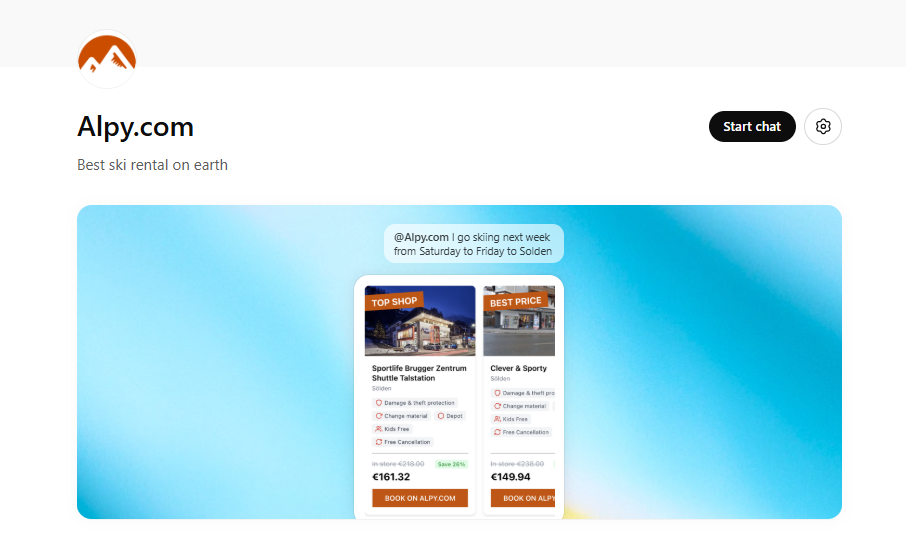
Once you’ve picked a resort, sort your equipment before you travel. Alpy.com lets you book ski and snowboard rental online in advance through local partner shops in Switzerland, with savings of up to 65% compared to paying at the resort counter, and free cancellation right up until the day before your trip. Alpy is rated 4.7 stars from more than 12,000 Trustpilot reviews, with over 1,150 partner shops across 12 countries — including plenty near Zermatt, Verbier, Grindelwald and Laax.
Book your ski or snowboard rental at alpy.com and save up to 65% →