

It’s the question almost every first-timer asks before they’ve even booked flights: how long is this actually going to take? Will I be skiing down proper runs by day three, or spending the whole week face-down in the snow? The honest answer is more encouraging than most people expect — but it does depend on whether you’re skiing or riding, and how many lessons you’re willing to book.
This guide gives you a realistic, day-by-day picture of what progress actually looks like, for both skiing and snowboarding, based on how most beginners genuinely progress with proper instruction — not the best-case Instagram version.
The Honest Answer: How Long It Actually Takes
Here’s the general shape of progress for both disciplines, assuming daily lessons on a first trip:
| Stage | Skiing | Snowboarding |
|---|---|---|
| Day 1 | Basic stopping and turning with instruction | Getting up, balancing, first linked edges |
| Days 2–3 | Linking turns, first proper green/blue runs | First linked turns, growing confidence |
| Days 4–5 | Confident on blues, trying easy reds | Comfortable on blues |
| End of week 1 | Independent on most blue runs | Independent on most blue runs, some reds |
| First full season | Confident on reds, exploring off-piste basics | Confident on reds, exploring park basics |
These are averages, not guarantees — fitness, prior experience with board sports like skateboarding or surfing, and simply how many lessons you take all shift the timeline. But this is a realistic baseline for a reasonably active adult with no prior experience.
Day One: What Progress Actually Looks Like
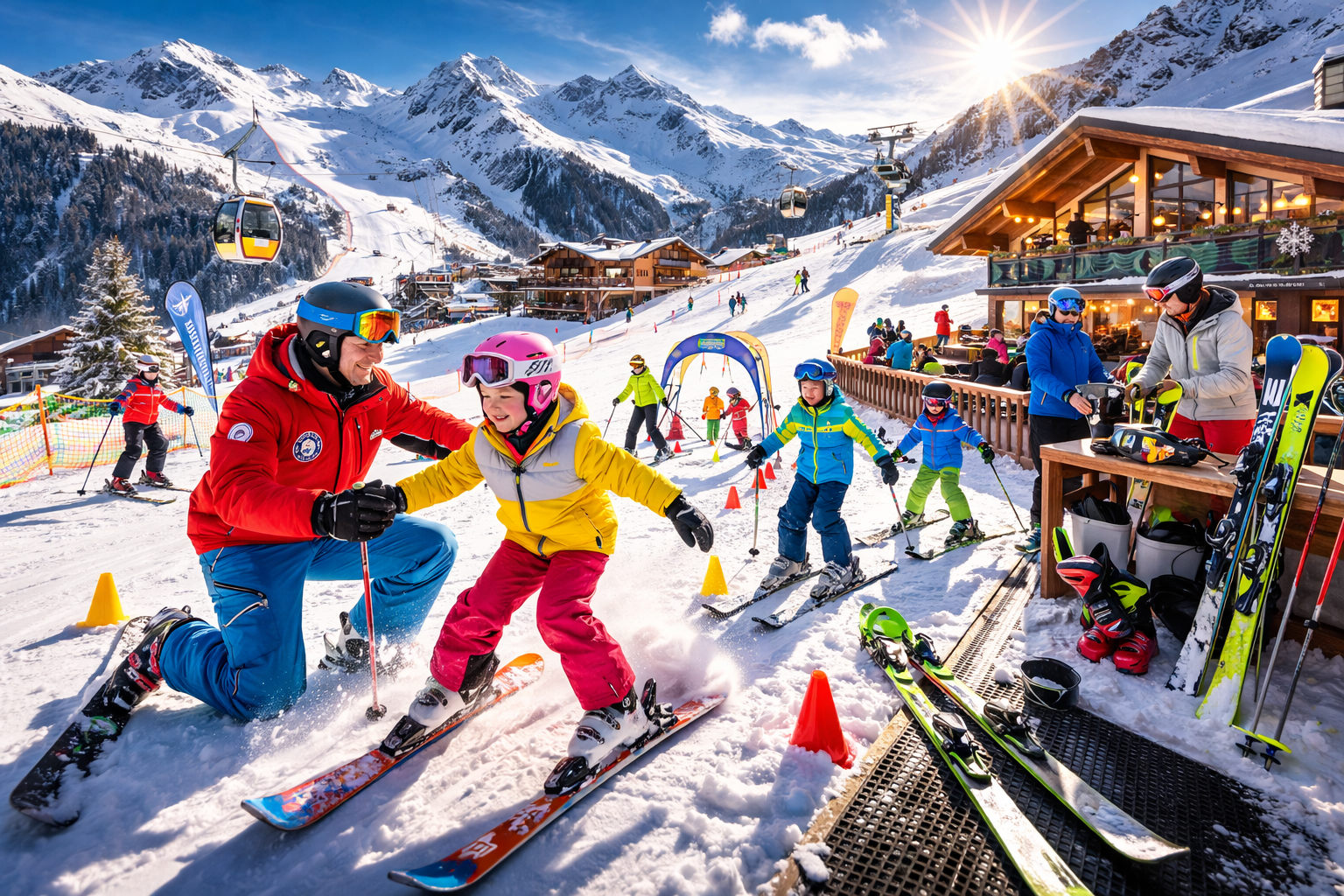
On day one, the goal isn’t style — it’s control. Skiers typically spend the morning learning to stop (the classic “pizza” or snowplough position), then move on to gentle turns by the afternoon. Most people can manage a beginner green run under instruction by the end of day one, even if it’s slow and a little wobbly.
Snowboarders have a different day one. Because you’re strapped to a single board facing sideways, the early hours are mostly about standing up, balancing, and linking your first heel-side and toe-side edges — which feels considerably less intuitive at first than skiing’s forward-facing stance. Falling more on day one is completely normal for snowboarders, and it doesn’t predict how quickly you’ll progress from here.
Days Two to Three: Linking Turns
This is usually where things click. Skiers start linking turns together rather than stopping between each one, and start venturing onto slightly longer green runs or their first easy blues. Snowboarders typically have their breakthrough moment somewhere in this window too — the point where balance stops being a conscious effort and starts becoming automatic.
By day three, most beginners in both disciplines report feeling noticeably more confident than they expected to at the start of the trip. This is also when tired legs and general muscle soreness tend to peak — which is normal, and a good reason to build in a rest afternoon if your schedule allows it.
One Week In: What “Confident on Blues” Really Means
By the end of a first week with daily lessons, most beginners are skiing or riding blue runs independently — meaning without an instructor alongside them, at their own pace, comfortably managing turns and stops. That doesn’t mean expert-level technique. It means you can get from the top of a blue run to the bottom without needing to stop and think through every movement.
Some beginners, particularly confident skiers, start testing easy red runs by day five or six. Others are perfectly happy consolidating on blues for their entire first week, which is just as valid a way to spend a first ski trip.
Common Sticking Points and How to Get Past Them
A handful of moments trip up most beginners, in both disciplines. Recognising them in advance makes them far less frustrating when they show up.
“I keep looking down at my skis or my board.” Almost everyone does this in the first couple of days. It throws off balance more than people expect, since your body naturally follows where your eyes point. Instructors spend a lot of day one just reminding beginners to look ahead — it’s normal, not a sign you’re doing something wrong.
“I can turn one way but not the other.” Extremely common for both skiers and snowboarders, and directly related to which foot or side feels naturally dominant. It usually evens out with repetition over days two and three, not through any special drill.
“Linking turns just isn’t clicking.” This is often less about technique and more about speed — many beginners slow down so much between turns that they lose the momentum needed to carve into the next one. A slightly steeper, gentle green run (not a flatter one) sometimes helps this click faster than more practice on completely flat terrain.
“My legs are exhausted by day three.” This is universal, not a sign of poor fitness. Skiing and snowboarding use muscles — particularly the quads — that most daily life simply doesn’t train. A short rest afternoon around day three, rather than pushing through, usually gets people back to full progress by day four.
Skiing vs. Snowboarding: Why the Learning Curves Differ
Skiing has an easier start because your body faces forward, both feet move somewhat independently, and stopping is a fairly intuitive movement. Snowboarding asks you to balance sideways on one connected board, which takes longer to feel natural — but once it does, many riders find their progress accelerates quickly, since the core skill of balance transfers to turns, edges, and speed control all at once.
Neither is objectively “better” to learn — they’re just different curves. If you want quicker early wins, skiing usually delivers them faster. If you don’t mind a slower first two days in exchange for a board-sport feel that many people find comes together in a rush, snowboarding is just as good a starting point. Our full comparison of skiing vs. snowboarding goes deeper on which might suit you better.
What Speeds Up Progress
A few things reliably shorten the learning curve for both skiers and snowboarders. Daily lessons, even short ones, beat sporadic self-teaching by a wide margin — a qualified instructor spots and corrects small technique issues before they become habits. Basic pre-trip fitness helps too, since tired legs make new movements harder to learn, not just more tiring.
Properly fitted beginner equipment matters more than people expect. Rental gear designed for first-timers — softer flex skis, snowboards suited to your weight and level, boots adjusted for comfort — makes the physical side of learning noticeably easier than equipment that’s too advanced for where you are. If you haven’t already, it’s worth reading what to expect on your first day on snow and the most common beginner mistakes to avoid before you travel — both cover practical details that make the first few days smoother.
FAQ
How many days of lessons do I need to learn to ski? Most beginners see solid progress with three to five days of lessons — enough to link turns confidently and ski gentle blue runs independently. A single day is enough to learn the basics, but confidence usually builds over a full first trip.
Is snowboarding harder to learn than skiing? In the first one to two days, most people find snowboarding harder, since it relies on unfamiliar sideways balance. Many snowboarders then progress faster once the basics click, often catching up to typical skiing progress by the end of a week.
Can I learn to ski or snowboard in a single week-long holiday? Yes. Most first-timers with daily lessons can go from complete beginner to skiing or riding independently on easy blue runs by the end of a one-week trip.
Does fitness level affect how fast you learn to ski or snowboard? Yes, to a degree. Basic leg strength and balance help, but lessons and repetition matter far more than fitness alone. Most reasonably active adults progress at a similar rate regardless of specific athletic background.
Do private lessons speed up progress compared to group lessons? Often, yes. Private lessons let an instructor focus entirely on your pace and specific sticking points, which can accelerate progress compared with a group lesson where the pace has to suit the whole group.
Conclusion
Learning to ski or snowboard is faster than most first-timers expect — three to five days is a realistic target for genuine confidence on easy runs, whichever discipline you choose. The biggest variables you actually control are lessons, rest, and equipment that fits your level, not raw athleticism. Book the lessons, take the rest afternoon if you need it, and don’t judge day one against day five.
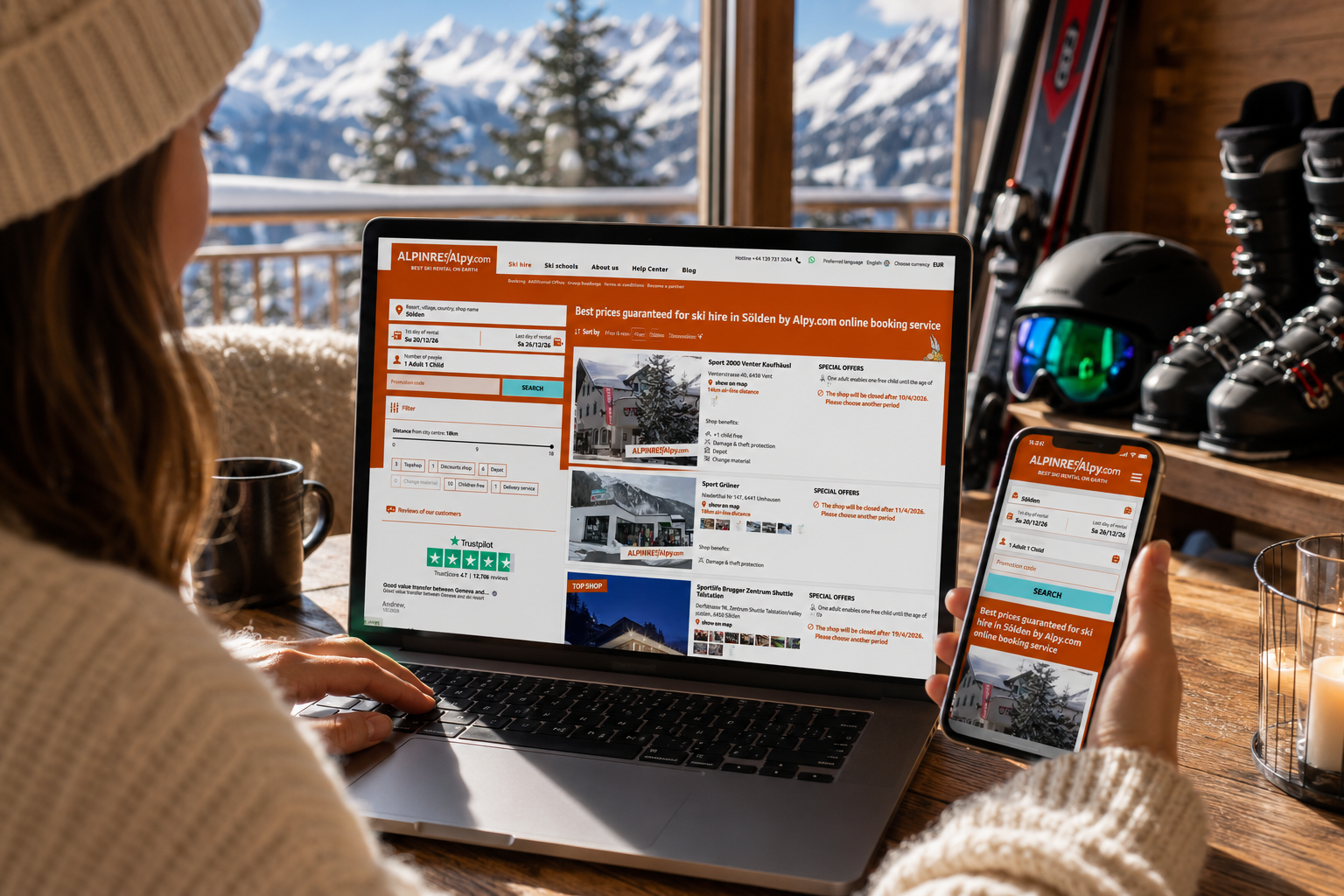
Ready to book gear that actually fits your level? Compare beginner-friendly ski and snowboard rental and save up to 65% versus walk-in prices, with free cancellation until the day before and 12,000+ Trustpilot reviews at 4.7 stars.