

Picking the best ski resorts in France is tougher than it sounds — the country has more terrain, more altitude, and more skiing history than anywhere else in the Alps. If you want a short answer: Val d’Isère for altitude and snow-sureness, Chamonix for off-piste and mountaineering pedigree, Les Arcs and La Plagne for ski-in/ski-out convenience across a huge linked area, and Châtel for village charm with access to the biggest ski area in the world.
Every one of these resorts has its own personality. Val d’Isère and Tignes share Espace Killy’s glaciers and 300km of piste. Chamonix sits in the shadow of Mont Blanc, where skiing off-piste isn’t a novelty, it’s the whole point. Les Arcs and La Plagne, linked as Paradiski, let you ski from your doorstep and cover 425km without repeating a run. Châtel keeps its Haute-Savoie farmhouse feel while opening onto the 580km Portes du Soleil.
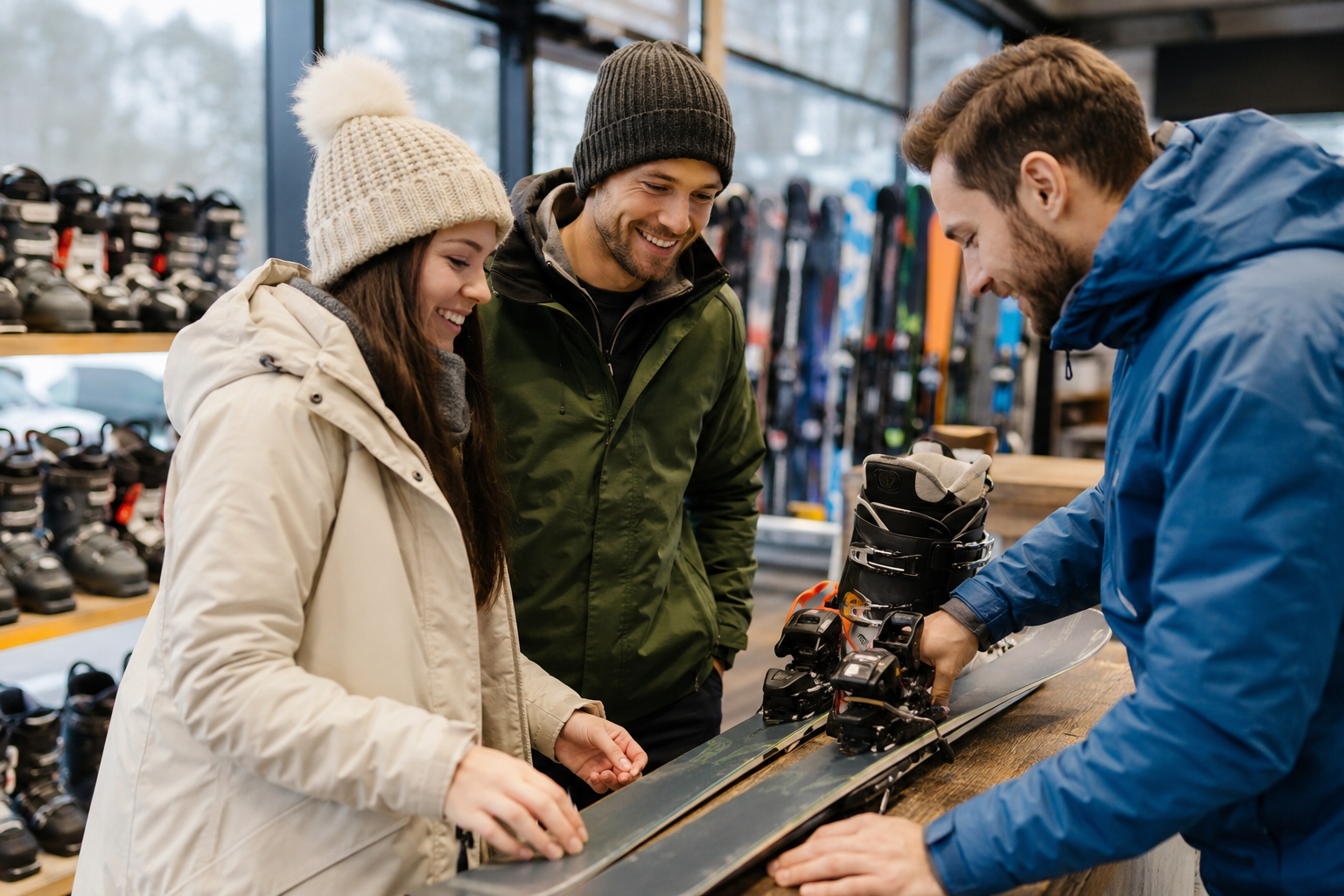
For families, couples, and groups planning a winter sports break, the right choice shapes everything from snow reliability and terrain to the feel of the village after the lifts close. This guide compares the top French ski resorts by skier level and style, then helps you sort the practical side too — from budget and pricing to booking ski or snowboard rental in advance through alpy.com, with flexible cancellation and hassle-free pickup at local resort shops.
What Makes a Ski Resort One of the Best in France?
The best ski resorts in France share four traits: reliable snow, usually from altitude or glacier cover; enough varied terrain to hold your interest for a week; efficient lift links so you’re not wasting time in queues; and a village character that suits your group, whether that’s Chamonix’s mountaineering grit or Châtel’s traditional charm. Altitude matters more in France than in most Alpine countries, because so many French resorts were purpose-built above 1,800m specifically to guarantee snow through the season.
Why France Leads Europe for Skiing
The French Alps are the core reason France dominates European skiing, with more skiable terrain above 2,000m than any other country in the Alps, and its purpose-built resorts, many constructed in the 1960s and 1970s, were designed for easy access around lifts and slopes rather than retrofitted onto existing villages. That means fewer bottlenecks, bigger linked areas, and, in resorts like Val d’Isère and Les Arcs, ski-in/ski-out access that older Austrian or Swiss villages can’t always match. The trade-off is that some French resorts feel more purpose-built than picturesque, which is exactly why Chamonix and Châtel, with their pre-existing village cores, stand out on this list.
The Best Ski Resorts in France for 2026/27
Each of these four resorts earns its place for a different reason. Between them, these featured picks sit among France’s top ski resorts and reflect different strengths across altitude, ability level, and travel style worth considering for a French ski trip.
1. Val d’Isère (Espace Killy) — High-Altitude, Snow-Sure Skiing
Val d’Isère, together with Tignes, forms Espace Killy, one of the highest and most reliable ski areas in the Alps. Pistes run from 1,550m up to 3,456m, and two glaciers keep snow on the upper slopes even into summer.
Espace Killy has 300km of piste across 156 marked runs (27 black, 40 red, 66 blue, 23 green), served by 88 lifts including two funicular trains. The area is named after Jean-Claude Killy, the resort’s own triple Olympic gold medallist, and the terrain reflects his pedigree: this is a resort built for skiers who want mileage and vertical, not just a scenic backdrop.
Val d’Isère’s village keeps a stone-and-timber Savoyard look despite decades of expansion, and its après-ski scene is one of the liveliest in the Alps. It draws a confident, snow-hungry crowd who plan their trip around the mountain rather than the other way round.
Alpy tip: Book your ski or snowboard rental for Val d’Isère before you travel. Altitude and glacier conditions mean gear gets tested hard here, and pre-booking through alpy.com guarantees the right kit is waiting for you rather than whatever’s left at the counter.
2. Chamonix — Mont Blanc’s Off-Piste Legend
Chamonix sits at the foot of Mont Blanc, western Europe’s highest peak, and has been synonymous with mountaineering and off-piste skiing since it hosted the first Winter Olympics in 1924. This is the birthplace of extreme skiing, and the reputation is earned rather than marketed.
The signature run is the Vallée Blanche: a 20km off-piste descent with a 2,700m vertical drop, starting from the Aiguille du Midi cable car station at 3,842m. It’s technically graded for intermediate skiers, but it crosses glacier terrain and should only be skied with a qualified mountain guide.
Beyond the Vallée Blanche, Chamonix’s separate ski areas, Grands Montets, Brévent-Flégère, and Les Houches, each have their own character, from steep couloirs to family-friendly cruising. Unlike purpose-built resorts, Chamonix is a real working town, with a historic centre, permanent residents, and a mountain culture that dates back well over a century.
Chamonix rewards experienced skiers most, though its lower slopes and the nearby Les Houches area work well for intermediates travelling with a mixed-ability group.
3. Les Arcs & La Plagne (Paradiski) — Ski-In/Ski-Out for Every Level
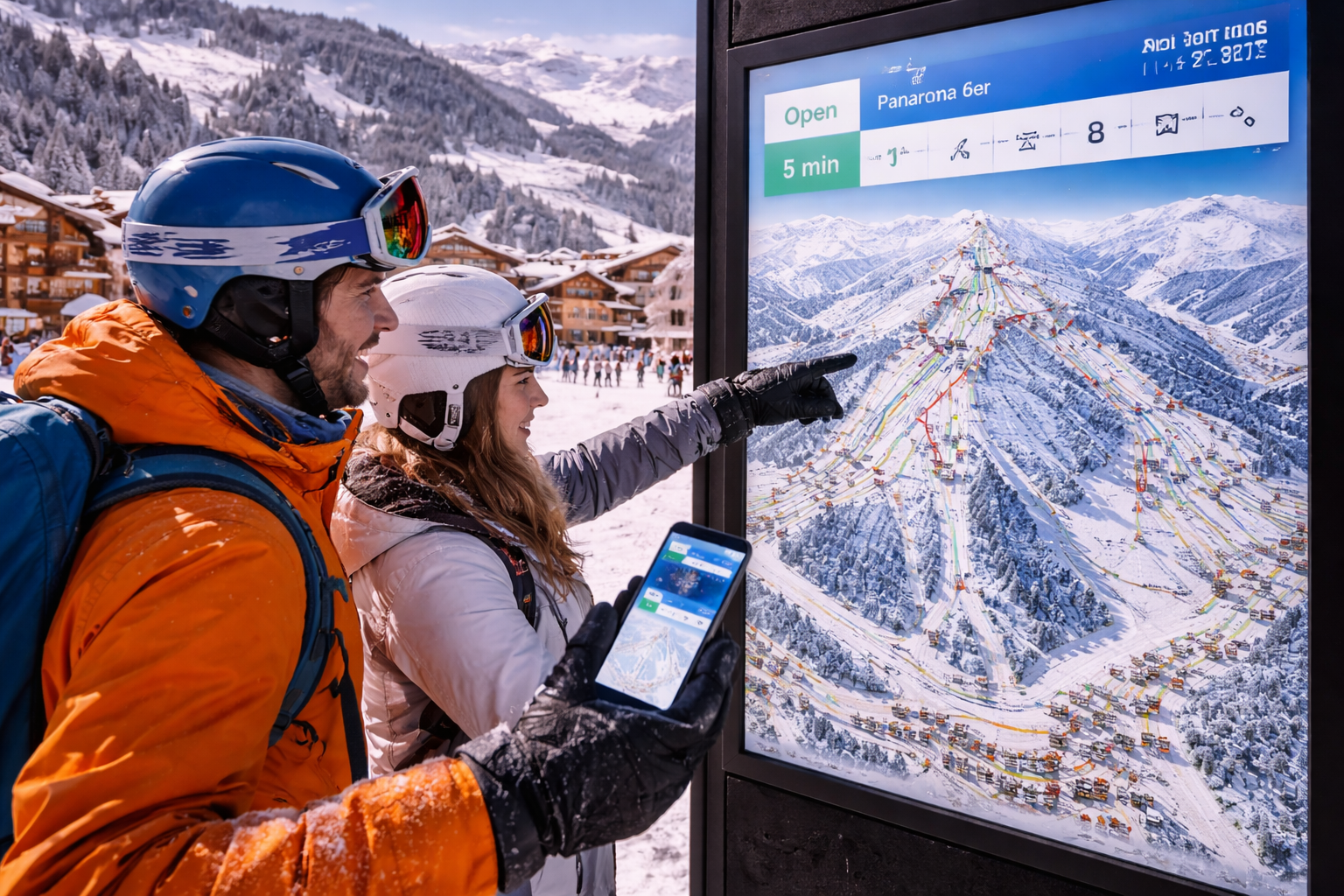
Les Arcs and La Plagne are linked by the Vanoise Express, a double-decker cable car that crosses the valley between the two resorts in under four minutes, forming Paradiski: one of the largest ski areas in France at 425km of piste, 259 runs, and 141 lifts between 1,250m and 3,250m.
The two resorts have distinct personalities. Les Arcs, built across four purpose-designed villages from Arc 1600 to Arc 2000, is fully ski-in/ski-out and has a steeper, faster feel, including the legendary 7km Aiguille Rouge piste. La Plagne spreads across ten villages at different altitudes, with wider, gentler terrain that suits families and intermediate skiers who want to cover ground without constant challenge.
Because the resorts are linked but distinct, Paradiski works well for mixed groups. Confident skiers can chase vertical on the Les Arcs side while others cruise La Plagne’s blues, and everyone can meet in the middle for lunch.
4. Châtel (Portes du Soleil) — Village Charm, Cross-Border Terrain
Châtel is a working Haute-Savoie farming village that happens to sit inside the Portes du Soleil, the largest linked ski area in the world at 580km of piste across twelve resorts spanning France and Switzerland.
Locally, Châtel’s own slopes run from 1,200m to 2,200m, with around 120km of piste accessible on the Châtel Espace Liberté pass, enough for a full week without leaving the immediate area. Buy the full Portes du Soleil pass and you can ski all the way to Morzine, Avoriaz, or over the border to Champéry in Switzerland.
Compared with Val d’Isère or Les Arcs, Châtel feels unmistakably like a real village rather than a resort: wooden chalets, a working dairy, and a slower pace off the slopes. It’s a strong pick for anyone who wants big-area skiing during the day and an authentic Alpine village in the evening, without the scale or price tag of the bigger names.
Which of These French Resorts Should You Choose?
If snow reliability and altitude matter most, choose Val d’Isère. If you’re an experienced skier chasing off-piste terrain and mountaineering heritage, Chamonix is unmatched. If you want to ski from your accommodation across one of France’s biggest linked areas, pick Les Arcs for a steeper feel or La Plagne for a gentler one. And if you want a real village alongside access to the world’s largest ski area, Châtel is the pick. There’s no wrong answer among these four resorts, only a better fit for your group’s ability and priorities: beginners often do best with France’s excellent ski schools, while Courchevel stands out if you want luxury hotels and access to extensive terrain.
Other French Resorts Worth Knowing About
These four resorts cover four distinct styles of French skiing, but they’re not the only names worth knowing. The Three Valleys — the famed Three Valleys ski area, also known as the valleys ski area — links Courchevel, Méribel, Val Thorens, and Les Menuires, and offers 600km of slopes, so if sheer scale and glamour are what you’re after, start there. Méribel adds charming chalet architecture and varied terrain for all abilities, which helps explain why this vast linked domain is so often named in “best of France” rankings. Alpe d’Huez and Les Deux Alpes, both in the Oisans massif, are consistently among alpy.com’s most-booked French resorts: Alpe d’Huez for its 249km of ski runs for all levels, long sun-soaked pistes, and après at la folie douce; Les Deux Alpes for Europe’s largest skiable glacier, summer glacier skiing, and a variety of après ski bars.
And if Châtel’s village charm appeals but you want a slightly bigger name within the same Portes du Soleil area, Morzine is worth a look too.
We’ll be covering several of these in dedicated resort guides soon — for now, they’re worth bookmarking alongside the four resorts above.
When to Go and What to Budget
French ski resorts typically open in early December and close in late April, so the winter season overlaps most of the ski season; January and February are usually best for snow reliability, while March and April often bring better weather and longer days, though high-altitude areas like Val d’Isère and the Vallée Blanche can hold snow into May in good years.
Typical costs across these four resorts:
- Lift passes: roughly €50–70 per day for adults, depending on resort and season
- Ski or snowboard rental: roughly €20–40 per day depending on equipment level
- Accommodation: roughly €100–200 per night for a family apartment in peak season
- Meals: budget €40–60 per person per day for on-mountain lunches and dinners
Many resorts also offer outdoor activities beyond skiing, which can affect your overall budget planning.
Booking early and travelling outside French school holiday weeks makes a noticeable difference to both price and crowds. If you’re mapping out your full trip budget, our guide to ski holiday costs breaks down where the money actually goes, resort by resort, and Alpy.com offers free cancellation up to the day before pickup for equipment rentals.
Frequently Asked Questions
What is the best ski resort in France for advanced skiers?
Chamonix is the top choice for advanced and expert skiers, thanks to its off-piste legacy and access to the Vallée Blanche, a 20km glacier descent from the Aiguille du Midi. Val d’Isère’s Espace Killy also has serious off-piste and steep terrain, but Chamonix’s reputation and guide culture make it the benchmark for experienced skiers in France.
Which French ski resort has the highest lift-served altitude?
Val d’Isère’s Espace Killy reaches 3,456m, among the highest lift-served altitudes in the Alps, with two glaciers keeping snow reliable into summer. Chamonix’s Aiguille du Midi cable car climbs even higher, to 3,842m, but that access point serves off-piste and mountaineering routes rather than marked, lift-served pistes.
Is Val d’Isère or Chamonix better for a first ski trip to France?
Val d’Isère suits most first-time visitors better. Its terrain is more varied by ability level, its village is purpose-built for skiers, and its lift system is more straightforward. Chamonix suits experienced skiers or those specifically chasing off-piste and mountaineering terrain, since much of its best skiing needs a guide.
What is Paradiski and which resorts does it link?
Paradiski is the linked ski area joining Les Arcs and La Plagne via the Vanoise Express cable car. Together they offer 425km of piste and 141 lifts, making Paradiski one of the largest ski areas in France. Les Arcs is steeper and fully ski-in/ski-out; La Plagne is gentler and spread across ten villages.
Which French ski resort is best for a mixed-ability group?
Les Arcs and La Plagne (Paradiski) work best for mixed-ability groups, since confident skiers can chase steeper terrain on the Les Arcs side while others cruise La Plagne’s gentler blues, with 425km of linked piste to explore. Châtel is a good second option, combining easy local slopes with the vast Portes du Soleil beyond.
How much does ski or snowboard rental cost in France?
Ski or snowboard rental in French resorts typically runs €20–40 per day depending on equipment level, though prices vary by resort and season. Booking online in advance, rather than at the resort counter, typically saves up to 65% compared with walk-in prices, worth checking across all four resorts covered here.
Ready to Book?
France’s best ski resorts cover every kind of trip: Val d’Isère for altitude and snow-sureness, Chamonix for off-piste pedigree, Les Arcs and La Plagne for ski-in/ski-out mileage, and Châtel for village charm with access to the world’s biggest linked ski area. Wherever you land, the resort matters less than making sure your gear fits and your days aren’t lost to rental queues.
That’s the part alpy.com handles. Book ski or snowboard rental online before you travel, skip the resort-counter line, and save up to 65% compared with walk-in prices, backed by 12,000+ Trustpilot reviews at 4.7 stars.